Showing posts with label Book Review. Show all posts

Thursday, May 29, 2014

Survival of the "Weakest": A Book Review of "The Pianist"

In September 1939, World War II began with Nazi Germany's invasion of Poland. Upon reaching Warsaw, the Nazis set up a ghetto for the Jews, and things appeared alright at first, perhaps just a little tense. Yet things escalated, and the true purpose of Germany was revealed: all Jews were to be killed.
The Pianist is a memoir by Wladyslaw Szpilman, a Polish Jew. In his book, Szpilman recalls his time in the Jewish ghetto of Warsaw as he struggled to survive and hide from Nazi soldiers. It was published following the war, but because the Soviet Union disapproved, it was banned. It was not until the late 1990's that it was republished in German and English. It was later adapted into a film version, though Szpilman passed away before the movie was completed.

SUMMARY
   The Pianist's author is also the main character (as this is an autobiographical memoir), Wladyslaw Szpilman in the 1930's, at both Berlin, Germany, and Warsaw, Poland. When the Nazis rose to power, Szpilman returned to Poland in 1933.
   He begins working for the Polish Radio until Germany invades in the fall of 1939. The station goes off air as he plays one of Chopin's Nocturnes. Not long after, Warsaw surrenders to Germany. The Nazis put up notices for the Poles: they will be cared for by Germany. There is even a special section for Jews! This is a relief for many Jews, though some still suspected treachery.
   It doesn't take long for the true intentions of the Nazis to be made clear. Raids occur all over Warsaw, in which Jews are abused. A little later, Jews are required to hand in property and valuables to the German state; Jewish families are permitted to own only a small portion of money, regardless of the family's size.
   The Szpilmans did not go along with their enemies and instead hid their money and valuables in strategic places around their home. But by the time 1940 came around, a section of Warsaw had been blocked with walls, and rumors circulated that this was to be the ghetto for Jews. 
   Still, Szpilman and his family were fortunate enough to already be living within the ghetto walls; they would not have to evacuate and be subject to Nazi abuse...yet.
   The ghetto quickly became a terrible place to live: full of fear, unsanitary, under the watchful eye of Nazis. However, the worst was yet to come, but Wladyslaw would (quite miraculously) survive the horrors of occupation under the Third Reich. 

CONTENT
   As a memoir of the Nazi Holocaust, The Pianist has much strong violence, some of it told in detail. It includes (but is not limited to) shootings, beatings, verbal insults, and mass murder. In one part, an elderly Jew cannot move because he is paralyzed from the waist down. Nazi soldiers take the chair in which he sits and throw him out the window, where the man hangs in a tree. There is another scene in which Jews are instructed to lie on the ground; a Nazi commander then calmly walks down the row, shooting each Jew. 
   There are occasional uses of G*d and only once is d*** used. 
   I recall no sexual content, for which I was glad. However, this was a non-fictional book, and there were not many places where such things would fit.
   The Pianist is a good story of one man's survival of brutal tyranny and death. Christians who read the memoir will clearly see God's hand in this man's life, whether he recognized it or not. 
   Szpilman's memoir delves into the human psychology of a wartime Polish Jew. There are many rewarding scenes in the book, but this book will likely leave you with a sick feeling of those who did not make it out of the ghetto alive. And this is right, as human lives are created by God. As Scripture tells us, man is made in the likeness of God, our Creator. 
   Yet this book also proves that not all Germans of the time were like the Nazis, as Winston Churchill led Great Britain to believe. Even some of the soldiers were compassionate, as one sees in the memoir. 
   I would say this book is targeted mainly for adults. I am not suggesting that teens should not read this book (as I did), but no one, even adults, should read this book lightly. The Pianist is a remarkable account of German invasion and the war years in Warsaw, but it is also a grave story of man's depravity without God, when he is left to himself.

GENERAL INFORMATION
Number of pages: 224
Author of book: Wladyslaw Szpilman
Published in: 1946 (under the name Death of a City), 1998 (German/English editions), 2002 (movie tie-in edition)
Primary audience: Adults

Monday, May 26, 2014

Don't Trust Anyone: A Book Review of Agatha Christie's "The Secret Adversary"

Two young people are not doing well monetarily. So they naturally do what anyone else would do and place an ad for two adventurers to go anywhere, doing anything. Before they know it, they get tangled in an international conspiracy!
The Secret Adversary was Agatha Christie's second novel, though far less known today than others such as Death on the Nile and Murder on the Orient Express. However, her second book won admiration from the New York Times Book Review. 

SUMMARY
   In May 1915, the Great War is in full swing and the RMS Lusitania has been hit by a German submarine torpedo. A mysterious man asks a young woman if she is a patriotic American and, after her answer, discreetly gives her a packet of paper. He tells her it is vital and that her chances of surviving the disaster are greater than his.
   Fast-forward four years to post-war London, just after the end of World War I. A young man, "Tommy" Beresford, and a young woman, "Tuppence" Cowley, both are out of money...and jobs. After some discussion in a café, the two create their own enterprise: "The Young Adventurers." No "unreasonable offer" will be refused.
   They find business sooner than they expected when Tuppence is trailed and hired by a Mr. Whittington. In his office, he asks her for her name. However, Tuppence decides not to give her real identity. Rather, she answers with an odd name she had overheard in the café: Jane Finn. Whittington's attitude changes at once, and he angrily asks what her demands are. Tuppence manages to bluff long enough to get some money from Whittington, who later vanishes. 
   Tommy and Tuppence decide to tackle the mysterious questions: who really is Jane Finn, and what is her importance? The pair decide to place an advertisement for anyone with information on this Miss Finn. 
   One reply to the advertisement leads the Young Adventurers to Mr. Carter, who ranks high in British intelligence. He tells the tale of Jane Finn, a young American who traveled to Europe on the Lusitania when it sank. A man gave her a vital yet secret treaty which she is to give to the American ambassador in London, England. However, both Jane Finn and the treaty disappeared. If the treaty was to resurface, it would mean great trouble for Great Britain and possibly another war. Carter offers a job to Tommy and Tuppence, who readily accept. Yet Carter warns that their job is secretive and full of great perils, including the mysterious figure of their opposition: "Mr. Brown."  
   The two young people set out on the case and eventually enlist the help of Jane's cousin, American millionaire Julius Hersheimer. The remainder of the story is packed with chases, kidnappings, espionage, and revealed mysteries.

CONTENT
   There is not as much violence in The Secret Adversary as there are tense moments. The threat of enemies constantly loom over Tommy, Tuppence, and Julius. Still, there are a few times when guns are fired at people, often during a chase scene in the book. 
    In an otherwise enjoyable adventure novel, there is a rather large amount of objectionable language. This includes many uses of h***, d***, and the British swear word "bloody." Although, I recall only one or two uses of God's name. 
   Julius plans to marry his cousin, which may seem strange (not to mention illegal) today, but it was rather common in the pre-1930's. Two characters also are surprised to find they have feelings for each other, and it is hinted that they will marry, but there is not much else in this area.
   When one hears the name "Agatha Christie," you often think of "murder mystery." While The Secret Adversary is undoubtedly a mystery, it seemed to me more of a spy thriller. While the main characters are not real "spies," the novel is quite similar to the spy and espionage genre. If you are not one for mysteries, this still might be a nice book for you to consider. 
   As a huge Agatha Christie fan, I believe The Secret Adversary can't quite compare to her other, more popular novels. Still, this was a great book to read and kept me on my toes (as the "Queen of Mystery" is known to do to her readers). While this novel is certainly too intense for children, teens and adults will likely find a great time in the book.

GENERAL INFORMATION
Number of pages: 320 (first edition)
Author of book: Agatha Christie
Published in: 1922

Primary audience: Teens, adults

Saturday, May 3, 2014

No Evidence for Evolution Here: A Book Review of Arthur Conan Doyle's "The Lost World"

Imagine living in a world where it was discovered that dinosaurs were living and flourishing on an uncharted piece of land. What kind of debate and tension would this cause in the scientific community? Sir Conan Doyle (author of the popular Sherlock Holmes books) does just that in his The Lost World.

SUMMARY
   What would a man do to win the heart of the woman he loves? If you are journalist Edward Malone, you find the most dangerous assignment you possibly can! The editor of the Daily Gazette sends the young Malone on a perilous mission: to interview Professor Challenger. While this seems easy enough, Malone is given the information that Challenger attacked several other men who approached him.
   The Professor had taken an expedition to South America, but no one could seem to get any details out of him. This is where Edward Malone comes into the spotlight. He visits the Professor and his wife for an interview under a clever disguise. When Malone's true intentions are revealed, Challenger assaults Malone. 
   Challenger is afraid of receiving more mockery because of his claims, but he finally tells Malone his secret: he has discovered a plateau serving as the home of dinosaurs! Malone is skeptical, yet Challenger offers a trip to the South American plateau, where the existence of these beasts will be proved.
   The two men are also accompanied by the scientist Professor Summerlee and explorer John Roxton. They and their native guides arrive at the plateau, but Challenger, Malone, Summerlee, and Roxton are trapped with the beasts of the island. The remainder of the story follows the adventurers as they brave monstrous dinosaurs and savage natives.

CONTENT
   One would think that a novel about explorers and dinosaurs would prove violent. While The Lost World certainly has a good share of violent material, it is not too gory. By the same token, much of the story is dialogue, sometimes merely about scientific classifications (which some, like myself, might find interesting!). People are killed and assaulted by not only dinosaurs, but also by other humans. There is the occasional use of rifles, also. 
   Language is rather minimal, with just a few uses of d*** and the English "bloody."
   There is nothing sexually immoral in the story. Malone is in love with a woman named Gladys, though she seems somewhat fickle when it comes to love. 
   The author, Arthur Conan Doyle, was an evolutionist, it would appear. His book is grounded on the theory that dinosaurs lived millions and millions of years ago, never coming face-to-face with humans. On the South American plateau, the native "humans" are evolving from monkeys to humans, and there are different tribes that are at different stages in their evolution. However, in writing The Lost World, Doyle's best "proof" for evolution actually disproves it! The creatures on the plateau are in the same state as if it was millions of years ago. But if everything is evolving to higher species, as evolutionists claim, why then would a plateau full of extinct kinds stay virtually unchanged for well over ten million years? This would actually prove an intelligent Creator! 
   While The Lost World has violence and atheist teachings, it is still a classic adventure novel that anyone can enjoy, with the right mind. If some readers are willing to overlook some possibly "dry" parts (as some might say), you will discover a decent action/adventure novel.

GENERAL INFORMATION
Number of pages: 272 (Modern Library, 2003 edition)
Author of book: Arthur Conan Doyle
Published in: 1912
Primary audience: Pre-teens, teens, adults

Monday, March 17, 2014

A Friend Inside the Fence: A Book Review of John Boyne's "The Boy in the Striped Pajamas"

The 1930's and 40's in Germany were especially dark times. Not only was Germany infested with hatred, anger, and evil, but also Poland had cruelty under Nazi rule. When it comes to the Holocaust, we often look back through the eyes of adults: Corrie ten Boom and Oskar Schindler are among the more notable eyewitnesses. But how often do we consider the views of children? John Boyne takes a fictional account of a young Germany boy, the son of a soldier, in his book The Boy in the Striped Pajamas (originally spelled "Pyjamas").
The book won numerous awards, just a couple of them being the Irish Book Award Children’s Book of the Year and the Bisto Book of the Year. 

SUMMARY
   To start out, as this novel tells the Holocaust story through the eyes of a young boy, he mispronounces some words. Thus, the actual word will be in parentheses.
   Nine-year-old Bruno lives with his family in Berlin, Germany. His father is a well-respected soldier, and both his father and mother are caring. Bruno also has an older sister named Gretel, whom he names "the Hopeless Case." But one day, his entire world is turned upside down. Father has been promoted by the "Fury" (the Führer, Adolf Hitler) and now they must move far from Berlin. They move to a place called "Out-With" (Auschwitz, a concentration camp in Warsaw, Poland), and things become dull for Bruno.
   Having lost his three "best friends for life,” Bruno has no one to play with. He does, however, see a "farm" from his window. There, behind fences, he sees all sorts of people: fathers, children, grandfathers, and uncles (in his mind, anyway). He is not quite sure why he cannot go play with them, since he has been restricted from exploring behind their house.
   He goes exploring back there, despite his parents' commands. He meets a boy his age named Shmuel, who wears striped "pajamas" (according to Bruno) and a striped cloth cap. They have a few things in common, and Bruno is thrilled to have met a new friend. There is just one problem: Shmuel gets to have a great time on the "farm," on the other side of the fence. Bruno begins to wonder why the fence is there, assuming it is to keep everyone who is outside from going in. The reader immediately sees the differences, however, between Bruno and Shmuel: one is a German and one is a Polish Jew; one is naïve about the entire Jewish problem, while the other has suffered in the Auschwitz death camp.
   The two boys have conversations nearly every day, for an entire year. But as Bruno begins to uncover more and more of the truth behind Out-With, his father and mother make a decision: Bruno and Gretel are to accompany their mother in returning to Berlin. Their father, though, will stay at Out-With.
   Bruno delivers the saddening news to Shmuel, but the two plan their final day together. Shmuel and Bruno (who will wear a spare pair of striped pajamas) will search for Shmuel's missing father, who left with a group and never came back.
   The two, unfortunately, cannot find Shmuel's father. While this is not the end, I won't say anything more except that it is heart-wrenching and touching at the same time.

CONTENT
   Since The Boy in the Striped Pajamas is told from a little boy's perspective, the violence is clear to those who know of the Holocaust, but not for the main character himself. It is implied that people are killed, beaten, and ridiculed (most of these being Jews). A young boy is punched by a soldier, resulting in a black eye. Also, while not clearly stated, deaths in a gas chamber are implied.
   Again, since the story is from a different point of view, the sexual content is implicated but not specifically dealt with. While there was little sexuality in the story, it is heavily implied that Bruno's mother is having an adulterous affair with a young officer. As I said, it is not stated, but implied.
   There is no specific use of swear words, but it is again implied that adults use foul language. As Bruno does not recognize these words, they are not used in the book.
   The Boy in the Striped Pajamas is ultimately a story of friendship, loyalty, and the innocence of children (in a certain sense). It was originally written for children and meant to be a teaching tool for elementary students, but I would personally not let a child read this without at least an adult pre-reading it. I think it is more suitable for teens and adults, as they would get more out of such a story.
   The idea behind a child's point of view of the Holocaust was actually quite brilliant. Although it has the implications of strong violence and brief sexual content, this really is an enjoyable read and a beautiful picture of friendship between races.

GENERAL INFORMATION
Number of pages: 216
Author of book: John Boyne
Published in: 2006 (original publication, UK)
Primary audience: Meant for children, but probably should be for teens and adults

Thursday, February 20, 2014

All Hail the Emperor: A Book Review of Genevieve Foster's "Augustus Caesar's World"

Many have heard of Octavian, better known as Augustus Caesar. Very few, though, have thought about his story from a first-person standpoint. Genevieve Foster used a process called "horizontal history" to write about Augustus' life. Horizontal history is when you study a person or place and also the other cultures/people around the world at that time. In addition to the main story of Augustus, Augustus Caesar's World also has side stories concerning the Jews (as well as King Herod and Jesus), Buddha, Confucius, and others.

SUMMARY
   As Augustus Caesar's World covers Augustus' life, there is a lot of information. On top of that, there are also the stories of Herod, Julius Caesar, Cleopatra, and Jesus Christ, among others.
   The book starts with Augustus (called Octavian at this point) consulting with a soothsayer (or fortune teller). She reads the stars and is stunned by the amazing future Julius Caesar's nephew has ahead of him.
   The initial story sees the rise of Octavian to power and especially the favor he gains with his uncle Julius Caesar, dictator-emperor of Rome. The boy Octavian is weak, pale, and often sickly, though he does accompany Caesar on his conquest of Africa. Readers are also told the tales of Cleopatra and her devious relationships with Marc Antony and Julius Caesar (as well as her son Ptolemy).
   There are also some chapters that focus on Virgil, Livy, and the loyal Cicero. These chapters also are about the rise of Octavian to Emperor Augustus Caesar, and how he corrupted the political system of Rome (essentially becoming a dictator, like his uncle before him).
   Between stories from Rome and its surrounding lands, readers also are told the stories of Israel, Egypt, China, India, and Persia. There is a lot of focus on the Jewish rebellions against Rome, as well as the general hatred for the Roman-placed king.
   The book ends with the death of Augustus Caesar and Christianity as the new religion for Rome.

CONTENT
   As this book deals mostly with Rome, you can imagine there is quite an amount of violence. During the reigns of Julius and Augustus Caesar, their empire was at war, especially with the German "barbarians." While the violence is not too descriptive (with a few possible exceptions), it is a recurring theme throughout the book.
   While there is no specific sexual content, some things are hinted at. For example, Julius Caesar is not married to Cleopatra, though their son Ptolemy is mentioned several times. Also, Mark Antony is quite the womanizer, as (by the end of the book) he has two wives and a lover. Like I said, there is nothing specifically detailed, but it is mentioned.
   Since Augustus Caesar's World is more of a biography than a novel, there is no foul language that I remember.
   Because the book shows not only Rome, but other countries at the time, there are multiple religions mentioned and discussed (i.e. Buddha, the Greco-Roman Olympians, etc.). While Christianity has more of a focus than others, none of the beliefs are presented as true or false. Foster, though, seemed to believe that all religions lead to heaven, though this is quite subtle and likely won't be clear unless you are looking for it.
   Augustus Caesar's World is a well-written, interesting, and informative account of the life of Caesar and the world in which he lived. While it is written more simplistically than most biographies, it is not a children's book. There are, however, many parts than can be beneficial to elementary-aged students. Overall, I liked it and I think any history fans will too!

GENERAL INFORMATION
Number of pages: 334
Author of book: Genevieve Foster
Published in: 1947
Primary audience: Pre-teens (with parent supervision), teens (readability is at a slightly younger level, but not necessarily content)

Wednesday, December 4, 2013

Bravery in A Most Unlikely Hero: A Book Review of Lois Lowry's "Number the Stars"

When wickedness and evil invade your country, what will you do to stand up for it? When you mention the heroic acts of people during the 1940's, we think of adults helping Jews. Names like Corrie ten Boom, Dietrich Bonhoeffer, and Oskar Schindler pop into our heads. What about children, though? Lois Lowry's Number the Stars is a work of historical fiction about a young Danish girl and her Jewish friend.
Number the Stars, published in 1989, was the Newberry Medal winner the following year.

SUMMARY
   Ten-year-old Annemarie Johansen and her friend Ellen Rosen walk home from school, Annemarie's little sister Kirstie tagging along behind. On their way home, they are stopped by Nazi soldiers (as Denmark is being occupied by Germany), who question them about all sorts of things. Kirstie gets angry, but the soldiers just laugh and let them go.
   Bad news reaches the Johansens that night. Annemarie's late sister's fiancé tells them that the Nazis are shutting down Jewish stores in Denmark. This spells out bad trouble for their neighbors, the Rosen family. The next day, it is discovered that the Nazis have obtained lists of Danish Jews from the synagogues and will use them to arrest all Jews they find.
   Mr. and Mrs. Rosen disappear, and Ellen stays with the Johansens. She disguises herself as the dead eldest Johansen daughter, Lise (pronounced LEE-ZA). While Kirstie sleeps with her parents, Ellen and Annemarie stay in the other bedroom.
   However, that night Nazi soldiers enter the Johansen apartment, searching for Jews, specifically the Rosens, as they were not to be found in their own apartment. The door to the girls' bedroom is shut, so Annemarie has enough time to realize Ellen is wearing a necklace of the Star of David and rips it off her neck. She does not have time to hide it safely, but must keep it clasped in her hand. When the Nazis see Ellen, they notice how her hair color does not match anyone else's. The Johansens are able to trick them, using an old baby picture of the real Lise who once had dark hair (as opposed to blond).
   Once the soldiers have left, Mr. Johansen calls his brother-in-law, Henrik. He uses a secret code to explain that Mrs. Johansen is bringing her daughters for a visit...along with a Jewish child.
   Eventually, Annemarie's mother takes the Rosen family to her brother. Hours later, though, Annemarie discovers her mother outside with a broken leg (she tripped on a dark trail). The two also discover a packet sitting by the steps of Henrik's house. "Mama" knows that it is vital to the Rosen's escape. Annemarie must brave the dangers of a dark forest, as well as Nazi soldiers (and their dogs), to save the Rosens and Uncle Hendrik from certain doom.

CONTENT
   While this is a book about Nazi-controlled Denmark, it is not as violent as one might expect. Number the Stars is a children's book, of course. There is some minor violence, though. Mrs. Johansen is smacked by a soldier, along with several tense encounters with Nazi soldiers (one including their dogs). The dangers of Jews being captured by Nazis are not specifically stated, but are hinted at (i.e. something along the lines of, "If they are caught..."). As this book is for kids, there is not specific or graphic Holocaust violence.
   There is no sexual content in this book.
   I was surprised at the language used in the story, as a kids’ book. There was one use of d*** and some inappropriate uses of God's name (all by Annemarie's mother, I recall). This annoyed me that someone would put these words in a children's book (not that it is alright for any age). 
   Apart from the language, I was extremely pleased with Number the Stars. It was a wonderful story about two Danish girls living under Nazi oppression. Without depicting the utter horrors of the Holocaust, it was able to introduce kids to that time period. It definitely deserved the Newberry Medal.
   You probably will not want kids younger than nine to read this, but older kids might just find Number the Stars to be a treasure!

GENERAL INFORMATION
 Number of pages: 138
Author of book: Lois Lowry
Published in: 1989
Primary audience: Children (older elementary), pre-teens

Sunday, December 1, 2013

The Unintentional Hero: A Book Review of Donita K. Paul's "DragonSpell"

A young girl has lived virtually her entire life as a slave—that is, until she is called by the land's creator and ruler to undertake a dangerous mission to rescue stolen dragon eggs.
DragonSpell is the first book of the teen DragonKeeper series. The series is not too well known, though it was named 2005's Christy Honor Book.

SUMMARY
   Kale Allerion has lived all her life as a slave. Her masters are not necessarily cruel, but Kale's situation is certainly not what you would call a wonderful existence. One day, she is freed to go to the Hall, where people are trained to serve Paladin, the counterpart of Wulder. The book opens with Kale travelling to the capital city Vendela, talking to a farmer.
   Eventually, she must obey Wulder by reclaiming dragon eggs stolen by the evil wizard Risto. The rest of the book follows her adventures on the way to Risto's castle, accompanied by her new friends Dar, Leetu Bends, and some dragons. Also, along the way she learns about Wulder and what it means to obey him.
   The climax of the story is surprising and exciting!

CONTENT
   DragonSpell has some violence in the same vein as The Chronicles of Narnia series. While there is injury, death, and battles, it is not too detailed. Fans of C.S. Lewis' work will recognize a similar approach to this violence.
   There is no sexual content at all, which I was pleased with.
   I recall no foul language anywhere in the book.
   There is the use of spells in this book, and some of the characters are wizards (good and bad, according to the story). There are also some scenes where the heroes speak to each other through their minds. DragonSpell is definitely a Christian book, though if a parent is concerned with magic and how their child will react to it, they might want to either pre-read the book or find a different one. The magic contained in the book is similar to The Lord of the Rings or The Hobbit. It is not real witchcraft and is meant to be something entirely different than sorcery and dark magic.
   It is rare to find a series written for teens that is clean and also presents a Christian worldview. Donita K. Paul's DragonKeeper series does just this! I really enjoyed DragonSpell, as I also enjoyed the following books in the series. It will appeal to both boys and girls, which is another plus. 
   Paul's writing style made me feel like I was really in the magical land, and any author that can do that is a favorite of mine! 

GENERAL INFORMATION
Number of pages: 339 
Author of book: Donita K. Paul
Published in: 2004
First in a five-book series
Primary audience: Pre-teens, teens

Friday, November 22, 2013

Murders from A-Z: A Book Review of Agatha Christie's "The ABC Murders"

Original 1936 cover
Imagine that an insane man begins a trek to commit 26 murders. The victim's last name begins with a certain letter, as does the name of the city they live in, such as "Betty Barnard in Bexhill." Detectives hurry to apprehend this man before he commits more murders. This actually happens in Agatha Chrisite's mystery fiction The ABC Murders.
 The main characters are Hercule Poirot (a famous character in Agatha Christie's books) and his friend Capt. Hastings (who narrates much of the novel). The end left me surprised and astonished, as Agatha Christie has a knack for doing that.

SUMMARY
   Belgian detective Hercule Poirot (that's "air-kewl pwa-ro") receives a letter from the mysterious ABC. It warns of an impending murder in Andover. He tells the authorities, but none of them quite take it seriously.
   When a Mrs. Ascher is murdered in Andover, then they certainly get serious about the whole thing! Poirot and a friend, Captain Hastings, investigate the murder scene. All they find of much value is an ABC Railway guide which has no fingerprints.
   Poirot gets another letter, this time signaling a murder to occur in Bexhill-on-Sea. It appears that the mysterious murderer has a crazed mania with the organization of the alphabet. Poirot, Hastings, the police, and a psychologist work together, but they can't seem to nab the crook.
   Finally, after a third murder in Churston, the relatives and friends of the victims join forces with Poirot to unravel the mystery.
   Let me tell you that the end will leave you utterly, amazingly, and in all other senses, surprised!

CONTENT
   The ABC Murders is, as the title implies, a murder mystery. This has a substantial amount of violence. The murders include hitting the head, strangling, and stabbing. There are also a few scenes in the book where blood is either mentioned or described. As in other Agatha Christie murder mysteries, she does not hold back details such as the look on the victim’s face. 
   One of the victims had a boyfriend, but as she is dead, there are no sensual moments there. Also, one of the victims clearly was fond of his secretary and his wife was fatally ill (as well as "out of it" most of the time), but he is loyal to his wife. He treats his secretary more like a daughter than anything. Once or twice, Poirot teases Hastings about admiring a beautiful girl or wanting to stay with a girl (this is a minor part of the book).
   There is some language in the novel, including a few uses G**, d***, and h***.
   While the mystery itself is enough to draw a reader into the story, there are also insights into human character (specifically that of an insane person). While I think there are both good and bad sides to psychology, The ABC Murders provided some interesting ideas, whether I agreed with them or not.
   This mystery book is certainly not appropriate for children. Teens will likely be able to handle it, but any younger and you might want an adult to pre-read the book. I personally very much enjoyed it, and it is always fun to try to figure out the mystery as you read the novel.

GENERAL INFORMATION
Number of pages: 256 (first edition)
Author of book: Agatha Christie
Published in: 1936
Primary audience: Teens, adults

Thursday, October 17, 2013

Broken Promises, Battling Warriors: A Book Review of William Shakespeare's "Troilus and Cressida"

Kindle edition
What is really behind vows of love and marriage? Is it just words you speak into the air, or is it something more than that? Shakespeare attempts to answer questions surrounding these issues in his play Troilus and Cressida. Although it is not one of his most well-known plays, the story has some interesting and good lessons to take from it. 

SUMMARY
   Paris, prince of the mighty city of Troy, kidnapped Helen, Queen of Greece. Her enraged husband Menelaus and the High King Agamemnon gather an army of Greeks to take back Helen. The war has lasted for seven years, so far...
   While the above paragraph does not have too much to do with the story, it is an important piece of background history. Troilus is the younger brother of Paris and Hector, sons of King Priam and Queen Hecuba of Troy. Troilus loves Cressida, daughter of a Trojan priest. She secretly loves him, but her uncle Pandarus is trying to get her and Troilus together.
   The two are finally brought together and pledge their love to one another. Nothing can go wrong now, right? Wrong! The Trojan council is offered a deal: a Trojan warrior (currently a Greek prisoner) will be returned if Cressida is given to Diomedes, a Greek warrior. Cressida's father, a Trojan priest, has joined the Greeks and orchestrated the entire deal. The Trojan council makes their decision: Cressida will be traded for the Trojan. 

CONTENT
   There is not too much violence in the book. Of course, a war is going on and soldiers talk about how they wish to kill their enemies. The last act of the book especially has many battle scenes. The story is not about the war, though; it really is about Troilus, Cressida, and the predicaments they find themselves in.
   Sometime in the first half of Troilus and Cressida, the titles characters are sent to bed. While not described or specifically stated, it is implied that the two lovers have sex before they are married. Troilus' brother Paris makes an excuse for Troilus' absence from a feast. Also, towards the end of the play Cressida and Diomedes speak lovingly to one another, causing Troilus anger at the broken vows.
   I recall no foul language.
   The reader of Troilus and Cressida can walk away with some moral lessons concerning loyalty, love, honor, and keeping vows/promises. Readers are faced with a choice (if they look hard enough): will I be like Troilus and honor my vows, or will I be like Cressida and break my vows?
   The play is a classical piece of literature (and on some high school reading lists) and provides some insightful thoughts. Younger children will definitely not want to read this.

GENERAL INFORMATION
Number of pages: 179 (Kindle edition)
Author of book: William Shakespeare
Published in: 1602 (believed to be the original year)
Primary audience: Teens, adults

Monday, September 23, 2013

A Modern Cain and Abel: A Book Review of Agatha Christie's "Death on the Nile"


Passengers are trapped on a Nile cruise ship and there is a murderer among them. Fortunately, the Belgian detective Hercule Poirot (pronounced AIR-KEWL PWA-RO) is on the case, ready to get to the bottom of the mystery.
Death on the Nile received good reviews upon its publication. The mystery is interesting, challenging, and there are some good things on the side. The book's main character is detective Hercule Poirot, who is one of Agatha Christie's most popular detectives (the other being Miss Jane Marple).

SUMMARY
   Linnet Ridgeway's best friend Jacquline de Bellefort excitedly announces that she is getting married. Her future husband is not rich, though, and Linnet offers Simon Doyle a good-paying job. "Jackie" quickly brings Simon over to meet Linnet, but things take quite a different turn than expected...
   The reader soon discovers that Linnet has married Simon, and they are off on honeymoon, currently traveling in Egypt. The couple go on a Nile cruise but find that Jackie has followed them (as she has everywhere they have gone). Both Linnet and Simon find this annoying, and Linnet speaks with detective Hercule Poirot, a fellow passenger.
   The passengers (apart from Poirot, the Doyles, and de Bellefort) are: Dr. Bessner (a European physician), James Ferguson (a young traveler and Communist), Guido Richetti (an Italian archaeologist), James Fanthrop (a young solicitor), Louise Bourget (Linnet's maid), Marie Van Shulyer (an American social butterfly), Cornelia Robson (Miss Van Shulyer's cousin), Miss Bowers (Van Schulyer's nurse), Andrew Pennington (Linnet's American trustee), Salome Otterbourne (a novelist), Rosalie (Salome's daughter), Mrs. Allerton, and her son Tim.  
   Pretty soon, a passenger is murdered, and it is up to Poirot to find the killer, as another murder (and an attempted one) is committed.
   Death on the Nile takes you on a wild ride, challenging your brain to figure out who is the murderer. And trust me when I say that the end comes with quite a surprise!

CONTENT
   There is a significant amount of violence in the novel. Of course, the story revolves around murders, so that in itself is enough to cause parents to take a look before younger children begin the book. There are descriptions of the murdered people, including blood. There is a scene where a woman fires a gun at a man, though he is not killed. Towards the end, a character commits suicide.  
   There are a few times sex is discussed, applied to psychology and "tension" between males and females. These are always mentioned by Mrs. Otterbourne. These scenes, though, are quite vague and rather few. Also, the main characters are involved in a messy situation: a woman marries her best friend's fiancé.
   The language includes uses of h***, God's name, and a few other words. Though it is not major, it still is part of the book.
   Death on the Nile has some good lessons, including some references to Scripture. In one great part, Hercule Poirot tells Jackie not to continue on her current path, lest she opens her heart to evil, and that it will certainly come. One bad thing is that Hercule agrees with a woman that he thought suicide was the "best way out" for a certain person's predicament.
   In conclusion, the mystery is a good one for those mature enough to understand murder, suicide, and the good and dangerous aspects of romantic love. This is certainly not a book for younger children, though more for the teenager and older.

GENERAL INFORMATION
 Number of pages: 288
Author of book: Agatha Christie
Published in: 1937 (UK), 1938 (US)
Primary audience: Teens, adults

Saturday, September 21, 2013

The Rising Mastermind: A Book Review of Timothy Zahn's New York Times Bestselling "Star Wars: Heir to the Empire"


The heroes of Star Wars are winning against the evil Empire! With the Emperor and Darth Vader gone, the Imperials are in chaos and utter trouble. That is, until a new leaders rises from the ashes: Grand Admiral Thrawn. The evil mastermind officer poses an evil threat to the infant New Republic.
Heir to the Empire is possibly the most popular novel set in the Star Wars universe. It not only continues the story ended in Return of the Jedi, but also sets the stage for future writers to enter the galaxy of Star Wars and make new stories there.

SUMMARY
   Grand Admiral Thrawn and Gilad Pellaeon must lead a defensive battle in space, from inside their command ship. After demonstrating his clear knack for using strategy, Thrawn tells his captain that he is going to solve a puzzle ("the only puzzle worth solving"): the destruction of the New Republic, formerly the Rebel Alliance. Thrawn and Pelleaon take creatures that can "repel" the Force by creating force-fields around the immediate vicinity. 
     Han and Leia are married, Leia is pregnant, and Luke Skywalker is a gifted Jedi Knight. Their individual talents are put to good use. During a diplomatic trip, Leia's life is put in danger, so she is rushed to safety. Luke agrees to train Leia as a Jedi.
   Later, Luke meets a mysterious Jedi named C'Baoth. He soon learns that this "Jedi" really uses the dark side.
   The book ends a clear story, and yet it leaves you on a cliff hanger for the remaining two books.

CONTENT
   The violence in Heir to the Empire is neither gory nor descriptive, but there is still the presence. There is the use of laser guns, lightsabers, and other various weapons. While this might scare younger children, the complexity and length of the storyline will get them before they reach much violence. 
   I recall nothing inappropriate in the book. I also don't remember any language.
   The Force energy field is mentioned and used throughout the book, in addition to a couple of references to meditation.
Heir to the Empire is not really what I would call a great book. In Star Wars science fiction writing, it is considered one of the best novels, but there are a lot of better books you could find. It does, however, provide adventure and a pretty good mystery. If you like science fiction and Star Wars, you would enjoy the book. Otherwise, don't waste your time with it.

GENERAL INFORMATION
Number of pages: 404
Author of book: Timothy Zahn
Published in: 1991
First in a trilogy
Primary audience: Teens, adults

Thursday, September 12, 2013

The Power of God's Love: A Book Review of Corrie ten Boom's "The Hiding Place"

Original cover
Germany takes control of Holland...Jews are persecuted...the darkness of Nazi tyranny is overwhelming. Casper ten Boom (a watch-maker) and his daughters Corrie and Betsie have a powerful weapon against the Nazis: their faith in Christ. Will they risk their lives to protect the lives of Jews, or will they live in peace?
The Hiding Place is the biography of Cornelia "Corrie" ten Boom, as well as an amazing historical account of the Holocaust. When I first read the novel, I was surprised by how wonderful the story was; it became an instant life-long favorite. 

SUMMARY
   The first four chapters of The Hiding Place cover Corrie's earlier life (up to her late twenties). They provide a good background for not only Corrie herself, but also her entire family. But then comes chapter 5, entitled "Invasion." Things quickly spiral downward as the Nazis inflict their strict laws. Jews are suddenly persecuted for being genetically or religiously Jewish.
   Corrie, Betsie, and their father Casper make a fateful decision: they will house Jews. They quickly learn, though, just how dangerous this work really is. It is made clear to them that they must build a secret room for their Jewish occupants. The ten Booms are faced also with other challenges, such as ration cards for the Jews.
   One day, a man comes out of the blue and mysteriously asks for money, claiming to be in trouble. Corrie gives it to him, but was that such a wise choice?

CONTENT
   I will start by saying that The Hiding Place is not a story for young children. When Nazi soldiers enter the ten Boom house/watch-shop, they are very brutal toward the inhabitants (Corrie is slapped in the face). The last six or seven chapters of the book are focused on the concentration camps. Deaths, injuries, and other Nazi atrocities are clearly depicted here.
35th Anniversary Edition
   There is not much sexual content. There is one chapter, however, when Corrie develops feelings for a young man named Karen, but it ends as quickly as it started. Also, as a child, Corrie tells her father they recited poetry in school, and she asks him what "sexsin" is. Casper uses this to demonstrate how God gives us what knowledge we need, when we need it (one of the most memorable scenes, I think).
   I recall that the soldiers are at least mentioned using swear words, though I don't recall any specific language. If so, it was very scarce and only uttered by the "enemies."
   In my opinion, The Hiding Place is one of the most important works of the later 20th century. Not only does it provide an excellent tale from history, but it also relays important spiritual lessons, such as faith in God, thankfulness, loving our enemies, and prayer. 
   If you can get a hold of the 35th Anniversary edition, I would highly recommend you do so. It includes new photos, the family tree, and the ten Boom family timeline. Of course, that is just the "icing on the cake;" the actual work is the best part. 

GENERAL INFORMATION
Number of pages: 241 (original edition), 271 (35th Anniversary edition)
Author of book: Cornelia "Corrie" ten Boom (with Elizabeth & John Sherrill)
Published in: 1974 (original), 2008 (fifth printing)
Primary audience: Teens, adults

Tuesday, September 10, 2013

A Dying City: A Book Review of Jeanne DuPrau's "City of Ember"


The earth is going to undergo a disaster. A group of scientists and others work together to make a plan to keep the human race from dying off during this disaster. They build an underground city and name it Ember. With the first mayor, they send a box that includes instructions of how to leave the city. The box is set to open in 200 years. So centuries later, the box silently clicks open...
Thus the stage is set for the post-apocalyptic novel City of Ember. It won a number of awards, most notable the 2003 Child Magazine's Best Children's Book, the 2003 Kirkus Editor's Choice, and the 2006 Mark Twain Award.

SUMMARY
   12-year-old Lina Mayfleet's class enters Assignment Day, in which all students in her class are given their lifetime jobs. The reader quickly discovers which are the most-wanted jobs and which are the dreaded ones. The mayor arrives and Lina draws "Pipeworks," one of the more dreaded jobs. Doon Harrow (the other main character) draws "Messenger," a good job, but not nearly the one he wanted: "Electrician." The two switch jobs and report for duty.
   Eventually, Lina discovers a beaten-up, old box and her baby sister Poppy eating the paper contents. She pieces together what is left and comes to the conclusion that she has found something important. No one really believes her, though, except for Doon and a greenhouse worker Clary.
   Lina and Doon work together to figure out what the instructions say and how to follow them. Along the way, they make a shocking discovery and, after reporting it to the authorities, are in big trouble. They must either find a way out of Ember (in the darkness) or be caught by their tyrannical leader.

CONTENT
   There is not too much violence in the book. The characters are placed in some peril and are threatened to be imprisoned, but I recall nothing gory or even very descriptive. There is one part, though, when an adult character is mentioned as "lifeless."
   Fortunately this book doesn't really have anything inappropriate. Lina's friend mentions that a strange-looking warehouse keeper is her boyfriend, but nothing else comes from this. This area at least was thankfully clean from problems.
   There is no foul language used in the story.
   The story occurs after something similar to the apocalypse. Christians know that Jesus will return in any way He deems, but the story in City of Ember is man-centered without any reference to God or any deity. Although the film is not the end of the world completely, it still is godless. The story is not a real apocalypse, though, because City of Ember is followed by three more books. Parents will want to judge for themselves whether they think their children can discern between a biblical end of the world and a man-centered one.
   Good morals are presented, including standing strong for your beliefs, caring for those around you, and perseverance. 
   City of Ember was a really great book and, while Jeanne DuPrau is no J.R.R. Tolkien or G.A. Henty, she does a decent job of describing the characters, their surroundings, and presenting their thoughts. The adventure is great and the author does a wonderful job of portraying what is would actually be like to live in an underground city. A great novel!

GENERAL INFORMATION
Number of pages: 270
Author of book: Jeanne DuPrau
Published in: 2003
First in a four-book series
Primary audience: Pre-teens, teens

Traveling Through History: A Review of Mary Pope Osborne's New York Times-Bestselling "Magic Tree House" book series


A young boy and his little sister find a tree house in the woods near their house. They climb to the top and find that it is full of books. Why are they there? And who owns the tree house? They soon discover that they can travel through history and journey to exotic new worlds. 
That is the beginning of the ongoing series Magic Tree House, in which siblings Jack and Annie complete special missions. They undertake these dangerous assignments for the mystical Morgan le Fay and Merlin of Camelot. The series currently has 50 books (as of September 2013), and the author is still going! The series has, I believe, been on the New York Times best-seller list since the early 1990's. 

SUMMARY
   Jack and Annie, brother and sister, find a tree house in the oak woods close to their home in Pennsylvania. They find that it is filled with books. During their first visit to the tree house, they open a book about dinosaurs and say that they wish they could go there. Suddenly, the wind spins, and they are whisked away from modern-day USA to...the "time of dinosaurs".
   This is just the first of fifty adventures in the tree house. The siblings meet famous people like Plato, Clara Barton, George Washington, King Arthur Abraham Lincoln, and Harry Houdini. Not only do they travel through history, but they also are taken to fantasy lands where there are giant sea serpents, magical "selkie" creatures, and the like.

CONTENT
   There is an amount of violence, as the children do travel through history (Civil War, eruption of Pompeii, book burning, etc.), but it is all scaled down for early elementary readers. There is no blood or descriptive gore but rather mild violence in the stories.
   There is nothing inappropriate that I recall. It has been a long while since I read the books, but as the series is for young children, there is nothing immoral that would be found in the books. Nor is there any foul language used at all.
   I doubt the author is a Christian (though I could not say for sure). Some of her books include controversial issues. For example, in Sunset of the Sabertooth, there is a sorcerer included in the story. Also, in the first book, Dawn of the Dinosaurs, the siblings travel back 65 million years ago (according to Osborne) when only dinosaurs lived and no humans.
   The series is excellent for children around the ages of 8-11, though I know of some 12-year-olds who also enjoyed the books. Each of the 50 books is short compared to most books, but it is a good size for early elementary kids who want a good adventure read. The stories will teach history, while also providing fantasy adventures and excitement.

GENERAL INFORMATION
Number of pages: varies (usually anywhere from 50-150 pages)
Author of series: Mary Pope Osborne
Published in: 1992-present (Book #50: Hurry Up, Houdini was published in 2013)
A fifty book series (as of September 2013)
Primary audience: Children


For a complete list of the books in the series (and also the nonfiction research guides), visit the Wikipedia page or the official website:
http://en.wikipedia.org/wiki/Magic_Tree_House_series or http://www.magictreehouse.com/

Sunday, September 8, 2013

Creatures in the Garden: A Book Review of Madeleine L'Engle's "A Wind in the Door"


What if you suddenly met an alien-like creature? What if your younger brother's teacher had an evil copy? What would it feel like to explore the massiveness of the universe and then the microscopic world of a cell? These questions provide the basic plot for Madeleine L'Engle's sci-fi adventure story A Wind in the Door, the sequel to her popular A Wrinkle in Time.

SUMMARY
   One day, Meg Wallace comes home from school and is promptly told by her younger brother Charles that there are dragons in their garden. Meg, Charles, and their friend Calvin soon discover it is a cherub (though he insists on being called "cherubim" as there are many "parts" of him) named Proginoskes, nicknamed Progo. They also meet a supposedly human-like being named Blajeny and Louise the snake, both of whom are Teachers. Blajeny begins teaching Progo, Calvin, Meg, and Charles.
   Evil beings called Ecthrois, they discover, are seeking to destroy the universe. How? By "un-Naming things." Despite a personal grudge against Charles' school teacher Mr. Jenkins, Meg must "Name" Mr. Jenkins (i.e. pointing out the real Jenkins from a number of Ecthroi copies).
   It is later discovered that the Ecthroi are destroying Charles Wallace's cell-like farandolae. Meg and Jenkins must journey inside "C.W.'s" cells to combat the Ecthroi. In the end, in order to save Charles, a final sacrifice must be made.

CONTENT
   There is the presence of violence in the book, though none of it is described in great detail. The final battle inside Charles Wallace is a bit tense, but no gore is described.
   I don't recall language or anything else inappropriate in the story.
   A Wind in the Door is an exciting and interesting science fiction adventure, but there is some false religion. The author claims to be Episcopalian, though there are dark beings, meditation-styled actions, and that there is good at the center of everyone.
   The story is great for older kids (like somewhere in the 11-14 age range), being able to discern between the truth of the Bible and the false spiritual practices in A Wind in the Door. If you have not read the first book in the Time Quartet (A Wrinkle in Time), I would suggest reading that one first, otherwise you might be lost. A Wind in the Door was enjoyable and exciting, though slightly littered with some less than noble content.

GENERAL INFORMATION
Number of pages: 203
Author of book: Madeleine L'Engle
Published in: 1973
Second of a four-book series
Primary audience: Pre-teens, teens

Monday, August 12, 2013

The Cost of Following Christ: A Book Review on Eric Metaxas' "Bonhoeffer: Pastor, Martyr, Prophet, Spy"

It is 1906 in Germany. A baby boy is born to a wealthy and illustrious family with famous relatives. The baby's parents named him Dietrich. Little did they know, this boy would grow up to become an intelligent pastor, defender of Jews, member of the Confessing Church, anti-Nazi, and a martyr for his beliefs. Dietrich Bonhoeffer was truly a remarkable person, and New York Times Best-Selling Author Eric Metaxas wrote a masterpiece on the life and work of this amazing German pastor. Bonhoeffer: Pastor, Martyr, Prophet, Spy: A Righteous Gentile vs. The Third Reich" (being the full title) won the ECPA Book of the Year, the Canterbury Medal by the Becket Fund recognizing courage in the defense of religious liberty, and the Christopher Award (highlighting the power of faith, courage, and action), all in 2011.

SUMMARY
   The book begins with the Prologue in 1945, with the end of World War II. Chapter 1 goes back in time and begins in 1896 with the meeting of Karl Bonhoeffer and Paula von Hase, Dietrich's parents. It ends with Dietrich's memorial service in 1945 (Bonhoeffer died during the war and the book refers to it throughout, so I won't try to hide the "spoiler"). In over 500 pages, it spans the entire thirty-nine years of Bonhoeffer's life.

CONTENT
   This is not a children's book. Bonhoeffer worked against the Third Reich, so he came across much violence including war, death of loved ones, concentration camps, euthanasia, and many other sick and wrong things. Set primarily during World War II (and a little during World War I), there is much violence discussed in the biography. 
   There is not really anything inappropriate in Bonhoeffer, but there are still some parts to mention. The word "prostitution" comes up two or three times, and towards the end of the book, it is mentioned that a German and a Jew had an immoral relationship. Also, Bonhoeffer has a romantic relationship with a younger girl, but there isn't anything inappropriate to be found in this (quite the opposite, actually).
   The only language used in the book is, "My God" a few times and a couple uses of the word "bloody." These words as only used in quotations of Bonhoeffer and others.
   This book is not a novel in any use of the word. It is a biography and historical account of Dietrich Bonhoeffer, so just be prepared for that. I thought the first eight chapters or so were a little bit slow, but those who stick with it are greatly rewarded after reading the last page! Although I enjoy reading novels, this is one of the most amazing and wonderful books I have ever read. I am quite interested in World War II history, and I put Bonhoeffer right up there with The Hiding Place as my favorite books of that period. 
   Bonhoeffer: Pastor, Martyr, Prophet, Spy is a great book, and I recommend it to all who can get a hold of this masterpiece.

GENERAL INFORMATION
Number of pages: 591
Author of book: Eric Metaxas
Published in: 2010
Primary audience: Adults (though I'm sure many teens will enjoy this as well)

Sunday, July 28, 2013

Once Upon a Time and Happily Ever After: A Book Review of "The Random House Book of Fairy Tales"

All of us are familiar with the typical rendition of stories like Cinderella, Little Red Riding Hood, Beauty and the Best, and many other fairy tales. Fewer of us, though, know the original stories. Ever since I was little, I have enjoyed listening to fairy tales, reading fairy tales, and now reading them to my little siblings. Over the years, I have looked through different fairy tale collections and one of the best I have found would be The Random House Book of Fairy Tales, adapted by Amy Ehrlich.
SUMMARY
   This collection includes nineteen fairy tales, from "The Emperor's New Clothes" to "Thumbelina." Each story, also, includes beautiful illustrations by Diane Goode, which made it an extra bonus! I never read fairy tales the same way after we bought this book. It is a wonderful addition to any family's shelf.
CONTENT
   Some of the fairy tales have some rather violent parts. For example, in the tale "Rapunzel," a character falls a long distance and pierces his eyes on thorns. For the youngest of children, parents might want to take a look at some of the stories before reading them their bedtime stories.
   There is no language and nothing too inappropriate. The princes and princesses throughout the collection have romantic relationships, but there is nothing immoral.
   As in most fairy tales, there are witches and the use of witchcraft (such as in "Snow White" and "The Snow Queen"). Parents will have to use their own judgment in this area.
   I very much enjoyed this collection and would recommend it to families in general, or anyone who likes a good fairy tale.

GENERAL INFORMATION
Number of pages: 208 pages
Author of book: Various (Adapted by Amy Ehrlich)
Published in: 1985
Primary audience: Children

Sunday, July 14, 2013

The Watchers are Everywhere: A Book Review of George Orwell's "1984"

1984 edition
of 1984, with preface
by Walter Cronkite
Three governments rule the world. Ingsoc (the English Socialist Government) knows everything about everyone. Their inventions called telescreens monitor all people, day and night. The shadowy leader of Ingsoc, Big Brother, is always watching his people. The "watchers" can be found everywhere...or so it seems.
George Orwell, pen-name of Englishman Eric Blair, is best known for writing Animal Farm and 1984. Those two stories are his great anti-utopian/socialist works. The flaws in socialism and communism are strongly and clearly pointed out in both books, but 1984 (published in 1948, the title switching the last two digits) goes into great depth to describe a world in which thoughts themselves can have you sent to prison and even put to death. From the first page to the horrific end, 1984 delivers a chilling and realistic version of what our world could be like if socialists and communists were to take over.
SUMMARY
   Winston Smith works for the Ministry of Truth. His job is to rewrite history and make Big Brother (and Ingsoc) look like a savior. There can be no error in his work, as it is enough to arrest a person. One day, though, he does the unthinkable...he thinks. He pulls out a pen and does something illegal: he begins writing a diary.
   Winston continues life in near-constant fear of being caught. Eventually, he meets a fellow worker named Julia. The two are both against the wrongs of Ingsoc and secretly meet together many times. How long can they go on like this? How long until the "Thought Police" discover them and arrest them? Have they already been found out? From start to finish, 1984 is an interesting and enjoyable story, though it is also haunting.
CONTENT
   The novel has its share of objectionable content. The violence in the beginning is only that of informational. For example, Winston explains to the reader that he will be shot in the head for writing a diary and wishing for the end of Big Brother's dictatorship. Also, hangings of criminals are public events to be enjoyed. In addition to that, a character is tortured several times towards the end of the book. Mostly, though, the things that may frighten younger readers in this area is suspense. The main characters are constantly trying to figure out if someone is watching them...and what will happen if they are caught.
   There are three scenes in this book that are inappropriate. In the first scene, Winston imagines a woman taking her clothes off as she runs across a field. In the second scene, two characters have a physical relationship in a forest. In the third scene, it is implied that these people have had a physical relationship.
   I don't recall any foul language in 1984, but there may be some words I just don't remember. Either way, the language is quite minor in the novel.
   Orwell's story is as important to us today as it was when first published in 1948. It portrays the wrongs of socialism and communism for what they are and what horrendous consequences follow. The story is set in a realistic world that is still possible today. I pray those leading our nation will turn to God for help, not themselves or other men. We all, though, need to stand strong against political evils that ay seep into our nation.
GENERAL INFORMATION
Number of pages: 267 (1984 edition)
Author of book: George Orwell
Published in: 1948
Primary audience: Adults

Friday, June 28, 2013

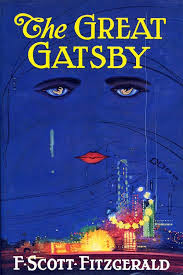
The Moral Decay of Humanity: A Book Review of F. Scott Fitzgerald's "The Great Gatsby"

The 1920's were nicknamed "The Roaring Twenties" for the dramatic changes in society. Men went from drinking
tea to drinking beer and whiskey. Women went from elaborate dresses that covered everything to "dresses" that came up to well above their knees. Politics went from an honest area (for the most part) to a get-rich-quick scheme. Some might ask why God allowed the 1920's to be as immoral as they were. This decade was part of His plan (as is all of the past, present, and future).
Francis Scott Key Fitzgerald (known better as F. Scott Fitzgerald) wrote a novel on the 1920's, what occurred during those years, and the effect it had on society. He did this in a historical fiction setting, using a cast of characters: from the wealthy Jay Gatsby to the flakey Daisy Buchanan, and also the passive Nick Carraway. Although The Great Gatsby was treated poorly when it was first published, it has since then been labeled one of the greatest American classics and is now on nearly every high school reading list.

SUMMARY
   It is summer 1922. The town West Egg (a fictional place), located in Long Island, is about to go through a dramatic and wild three months. Yale graduate and World War I veteran Nick Carraway has just moved there, just across the water (in the town of East Egg) from his cousin Daisy and her husband Tom Buchanan.
   During a visit from Nick to the Buchanans', the reader learns that Tom has been having an affair. There is also a part in the book where Tom takes Myrtle Wilson around New York for an afternoon.
   Nick later meets his mysterious millionaire neighbor Jay Gatsby. After attending a few of his parties, Nick learns that Gatsby once had a relationship with Daisy. His purpose for moving to West Egg was to attempt to "restart" a romance with Daisy.
   The book continues until two of the main characters die and the reader is left with Nick depressed and contemplating time and how it relates to life.

CONTENT
   There is some violence in the story, but not too much. Tom punches Myrtle and often acts brutally. Also, a character is killed when they are hit by a car. There is other violence, but that is the worst of it, I think.
   Tom Buchanan has an open affair with Myrtle Wilson, as his wife Daisy has an affair with Jay Gastby. Also, Nick Carraway begins a relationship with golf pro Jordan Baker and the two kiss at the end of one of the chapters. The immorality in the book is one of the biggest problems.
   The language throughout the book is overused. There are many uses of God's name, d***, b****, h***, and other words I can't recall (tough these were the worst). The language was the other main problem with The Great Gatsby.
   Despite all this trash, there is at least one good lesson we can learn from this novel: the past cannot be relived. The past stays in the past. We can learn much from it, but we can never recreate it. Also, a billboard is described that represents a "dead god" looking out over the decaying moral values of the society. While our morals have disappeared a lot in America, we know that God is not dead but very much alive and controlling all things providently.
   Overall The Great Gatsby has interesting insights into the world of the Roaring Twenties, but honestly, I doubt I would have read this book had it not been for school. If you are looking for an enjoyable book that is clean, you are not going to find that here.

GENERAL INFORMATION
Number of pages: 218
Author of book: F. Scott Fitzgerald
Published in: 1925
Primary audience: Adults

The Farm, the War, and Reunited: A Book Review of Michael Morpurgo's "War Horse"


2010 Scholastic Edition

A drunken man purchases a horse at a horse sale. It is a fine horse, but not fit for work on the farm. With the rent needing to be paid, something has to be done. The farmer's son steps in and trains the horse to work on the farm. The two form a deep bond of friendship.
The above paragraph has the makings of an interesting story. Author Michael Morpurgo (known for writing Kaspar: Prince of Cats and Private Peaceful) crafted a tale of a horse who is taken into battle during World War I, the "Great War." This book War Horse was runner-up for Whitebread Book Award in 1982. From it came an award-winning play in 2007, as well as a 2011 Steven Spielberg film.

SUMMARY
   The entire book is told from the horse Joey's perspective. The story begins with a five-month old horse being bought by a drunken farmer, Mr. Narracott. He takes the horse home and his son Albert takes an immediate liking to the horse. He names him Joey and quickly teaches him how to work on the farm. The two become close friends.
   Trouble comes soon, though. Joey is sold to the British army, specifically to one Captain Nicholls. The British cavalry attacks the Germans, but the battle is disastrous for them and many are killed. They realize they cannot use cavalry in this modern war.
   Joey falls into German hands. Later, though, Joey and another British horse named Topthorn find themselves in the care of an elderly man and his granddaughter Emilie. After that, they are again taking by the Germans.
   The story continues to the end of World War I, when Joey returns to the British army. The ending is good, and I thought it was appropriate in respect to the entire story.

CONTENT
   For a children's book, there is not too much violence, but (as it is during a war) there is enough to make it something younger children probably should not read. There are deaths, injuries, and war violence. There is nothing too descriptive, though, and no gore. Apart from this, Albert's father is drunken and is abusive towards Joey at times.
   As the story focuses on a horse, there is really not anything inappropriate. Albert mentions that he has a girl back home and the two are married at the end of the story, but there is nothing immoral in the book.
   The language is rather light but still not something for younger children. The word "devil" is used several times, and God's name is used at least that much.
   Good lessons appear in this story: loyalty, friendship, and kindness are some of these. For example, Joey is loyal to his friend Topthorn throghout the war and also during their good times with Emilie and her "Grandpapa."
   I would recommend this to anyone who likes battle stories, historic books, or just enjoys a good adventure. Although this is a children's book, the violence and language make it more for pre-teens and perhaps any teens who find it intriguing. An interesting thing I would like to add is that the entire story was inspired by a painting and also is based on a true story. I am not sure, however, just how close War Horse is to the life of Captain James Nicholls.

GENERAL INFORMATION
Number of pages: 188 (2010 Scholastic Edition)
Author of book: Michael Morpurgo
Published in: 1982 (Great Britain)
Primary audience: Pre-teens