Monday, June 10, 2013

The Boy in the Clock: A Book Review of Brian Selznick's Caldecott Award-winning "The Invention of Hugo Cabret"

A young boy becomes an orphan when his father dies. He is adopted by his uncle who teaches him how to take care of the clocks in the Paris train station. After this, the boy tries to fix an automaton (or a "mechanical man"), hoping to find something about his father.
Just the above events would make a great story, but The Invention of Hugo Cabret (A Novel in Words and Pictures) by Brian Selznick has many more exciting events: a long-lost director, a mysterious girl, and silent films! This book is, to my knowledge, the first of its kind because it is a story told with words and spectacular pencil illustrations. The pictures continue what the words said just before. Here is an example from the book: "The curtains parted. A girl looked out. Hugo thought for a second tat he had hit the wrong window, but then he recognized the girl." After that, there is a picture shown of the girl.

SUMMARY
   Hugo Cabret's father works with clocks. He also works at the local museum and one night he finds a mechanical man/robot, an automaton. He takes it back home and Hugo convinces him to try to fix it. All seems to be going well...until Hugo's father comes to an unfortunate death. He discovers this when his drunken uncle delivers the news. He takes Hugo to the Paris, France train station where he teaches him how to work on the various clocks.
   One night, though, his uncle disappears. Hugo is left alone in the station and must steal food and drink to survive, while working on the clocks. Then, he is caught stealing mechanical parts from the station's local toy maker. The old man takes Hugo's notebook (which belonged to his father) and leaves soon after.
   Hugo follows the man to his house and has the door slammed shut in his face. He then meets a young girl who resides with the man and his wife. She says she will help him and the two begin to be friends.
   The story continues as mystery after mystery piles up for Hugo and the girl, Isabelle.

CONTENT
   There is not a lot of violence in The Invention of Hugo Cabret, but it has some more tense moments. In the first part of the book (there are two parts that comprise the story), Hugo's father dies in an accident. In one scene, Hugo is nearly ran over by a train and the Station Inspector is somewhat rough towards him in the following scene. Also, Hugo's uncle is drunk, but there is not a lot more on this.
   This book was very clean, except for one instance where the toy maker uses God's name. Also, while Hugo uses no fowl language, he is rude to the toy maker in several scenes. Once, early on in the story, he spits in front of him.
   I thoroughly enjoyed this novel and would like to read Selznick's more recent book, Wonderstruck. It is not hard to see why it won a Caldecott Award, as the storytelling is superb and the drawings are marvelous (Brian Selznick has illustrated many books)! The characters are also delightful, from Hugo to the toy maker (he does have a name, though it would spoil the story). This is a great book just to read alone or read aloud to your family. I would say this is one of my favorite books!

GENERAL INFORMATION
Number of pages: 533
Author of book: Brian Selznick
Published in: 2007
Primary audience: Children, Pre-teens, Teens

Monday, June 3, 2013

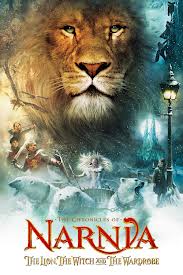
Welcome to Narnia: A Movie Review of Andrew Adamson's "The Lion, The Witch and the Wardrobe"

The famous Chronicles of Narnia series of books has been enjoyed by genarations of readers. In the late 1980's-early 1990's, BBC made film versions of some of these books. Four out of seven books were made into film and a cartoon version also (in 1979, I believe) came out, but no more live acting was to be seen...until many years later.
In 2006, Walt Disney Entertainment and Walden Media released a wonderful movie version of The Lion, the Witch and the Wardrobe. While making minor changes from C.S. Lewis' book, the movie was largely true to the original story. The cast includes Liam Neeson as the voice of Aslan and Tilda Swinton as the White Witch.

SUMMARY
   The story begins with a scene of London being bombed by Germans. The four Pevensie children and their mother rush to shelter. The next day (presumably), the children are sent away to the countryside for safety. They then arrive at the manor house of an elderly Professor.
   While playing hide-and-seek, Lucy hides in a wardrobe. To her surprise, an entire snow-covered world is on the other side. She meets a Faun creature named Tumnus. The two of them become friends and he tells her of the eternal winter cast on the land Narnia by the evil White Witch.
   Tumnus escorts Lucy back to the lamppost at which they met. She returns to our world and tells her siblings what has occurred. None of them believe her and the oldest siblings (Peter and Susan) consult the Professor.
   Eventually, Peter, Susan, and Edmund (the third sibling) make it into the wardrobe. In there they find out Tumnus has been arrested. After this, they meet Mr. and Mrs. Beaver who take them to the great lion Aslan.
   Unfortunately, Edmund is with the White Witch, who wants all four siblings dead so that she may continue her unlawful reign. Towards the end of the film, the good Narnians battle the evil forces led by the White Witch. As with all good stories, good ultimately wins over evil in the end.

CONTENT
   The violence in the film is probably not quite enough to change the PG rating to a PG-13 one, but young children may be scared by the Witch's minions, her wolves, and the battle scenes. In the opening scene, London is bombed and this may frighten younger viewers. 
   There is a battle towards the end of the film. There is not too much violence in these scenes and there is no blood, except that Edmund is wounded and I recall seeing some blood (not to an extent of overkill). Most of the casualties brought about by the enemies are when the Witch freezes creatures to stone, using her wand.
   In one scene, the Witch stabs a character (this is implied and we are only shown the character's face). The creatures that serve her in this scene are creepy and will likely frighten younger viewers. Most of the other parts in the movie are enjoyable for all ages.
   I enjoyed many things about this film, especially in how it stayed rather close to the book. As it is similar to the book, Christian themes come out throughout the movie (though I doubt the director meant for that...). Aslan is resurrected after dying, reminding us of Christ. This does not mock Christianity, though, because the character of Aslan is the mighty protector of Narnia. Without him, the battle would have been lost.
   Moral lessons such as loyalty and forgiveness are also good aspects of the film. For instance, though Edmund strays from his siblings and joins the White Witch, he is forgiven when he returns. With aspects such as these, the typical Disney film's lesson of "follow your heart" or "trust in your heart" did not make it into The Lion, the Witch and the Wardrobe.
    I think this is a great family film, no matter your age. Though some parts will likely frighten younger children, the majority of the film is fine. There is no profanity and nothing inappropriate. I enjoyed this film, as I did the two following ones (Prince Caspian and Voyage of the Dawn Treader) and would love to see more made in the future.

GENERAL INFORMATION
Length: 145 minutes
Rating: PG (for battle sequences and frightening moments)
Director: Andrew Adamson
Producers: Mark Johnson, Philip Steur
Music: Harry Gregson-Williams
Year of release: 2006
Audience: Family

Sunday, June 2, 2013

Burning Books: A Book Review of Ray Bradbury's "Fahrenheit 451"

Imagine yourself in a United States where books are illegal to read. And the firemen, instead of stopping fires, start fires. The government sends firemen to burn houses of people who read books. What would happen if one of these firemen was caught owning, reading, and memorizing books? The result was Ray Bradbury's popular Fahrenheit 451.
In an interview, Bradbury (who passed away in 2012) said that he discovered 451 Fahrenheit is the temperature at which books burn. This is how he came up with a title for his book.

SUMMARY
   It is the 24th Century. In the USA, books are forbidden. Readers are introduced to fireman Guy Montag, who has the job of starting fires. The laws were clear: books (and the houses in which they were hidden) were meant for burning.
   Montag enjoys his job...that is, until he meets seventeen-year-old Clarisse McClellan. She asks whether or not he is truly happy. Montag begins to rethink his life. He realizes it is quite a mess. He burns innocent people and his wife is addicted to sleeping pills. He loves his wife (or at least believes he does...), Mildred, but their relationship is falling apart.
   After work each day, he talks with Clarisse to try and discover how she can be so happy when the world has rejected her. One day, though, the young girl is not where she normally is. Her family's home (located next to Montag's) is empty.
   Soon after, Montag contacts a professor named Faber. Together, they work out a plan to slowly introduce books around their city and eventually the world. Montag is soon discovered and goes on the run, abandoned by his wife.
   The book leaves us with somewhat of a cliff hanger, but also with some interesting thoughts on books, philosophy, and censorship. Montag survives being chased by a monster called the Mechanical Hound and meets some homeless people who also love books. Their plan is to train future genarations (their children and grandchildren) to memorize each at least one book.

CONTENT
   Fahrenheit 451 is a well-written book. Unfortunately, language appears throughout the entire novel. D*** is used many times and God's name is used just as much. There are also uses of h***, but nothing stronger than these words (though God's name is not to be used lightly).
   Violence is also something to be aware of. The most violent scenes are in which houses (and even people) are burned. Montag also murders some men towards the end of the book. These scenes, though, are not too descriptive.
   Mildred, as I said earlier, is addicted to sleeping pills. In one scene, Montag discovers that she has used up an entire bottle. Also, Montag frequently meets with young Clarisse McClellan, but their relationship is nothing more than friendship. I recall nothing inappropriate other than one scene where she has Montag rub a dandelion under his chin. She says that if yellow marks are left behind, he is in love. There are no yellow marks, yet Montag is married. This, of course, was not very inappropriate. 
   Some important themes in the book are that of knowledge, learning, and censorship. In today's age of Kindles, Nooks, and iPads, I think we are having less and less respect for the written word. I am not saying the world of Fahrenheit 451 is going to be our future, but I do think we can be more aware of things like censorship.
   Although Bradbury was not a Christian, the Bible and Christianity were mentioned several times throughout the novel. I do not recall anything blasphemous, but the point of view was from an unbeliever.
   The novel was on my optional 6th grade reading list. I finally got around to reading it this April and May (and also got the privelage of listening to it read by the author!). Looking back on the book, I'm glad I did not read it as an eleven-year-old. I believe that I would not have been able to get all I could out of it. I got much more out of it as I read it in high school. This book is wonderful and I can see why it was a bestseller (selling around 5 million copies). I think everyone who reads this will get a lot out of it.

GENERAL INFORMATION
Number of pages: 179
Author of book: Ray Bradbury
Published in: 1953
Primary audience: Teens, Adults (parents may want to determine whether younger children can read this book)

Saturday, June 1, 2013

Update to Blog: Genre Labels

   We will now be tagging each book and movie with its particular genre (thus, for example, The Hobbit: An Unexpected Journey will have the tags "Adventure" and "Fantasy"). If you are looking for a specific genre such as "Fantasy," "Action," etc. then I hope these new labels will assist you!

~nbr1776

A Hero to the Rescue: A Movie Review of Richard Donner's "Superman: The Movie"

Even those who are not fans of superheros have undoubtedly heard of the popular Superman. His first big movie was the 1970's Superman: The Movie. While it was a decent film, it had its downsides, too.
The cast included Christopher Reeve as Superman/Clark Kent, Gene Hackman as evil mastermind Lex Luthor, and Margot Kidder as reporter Lois Lane.

SUMMARY
   Alien scientist Jor-El predicts that his home planet Krypton will soon be destroyed. No one believes him and he promises that he and his wife will stay put. He says nothing of his infant son Kal-El. Jor-El and his wife Lara send Kal-El to earth in order to escape the approaching destruction. He also mentions that their son will be useful on earth and protected.
   Kal-El travels through space and time, arriving at earth. He is immediately adopted by Mr. and Mrs. Kent, who find him on the side of the road. Kal-El is named Clark and grows up, struggling with his super powers. After his adopted father's death, he leaves the Kent farm.
   In Metropolis, Clark disguises himself as a shy and clumsy man. He finds a job as a reporter at the Daily Planet and meets Lois Lane. He leaves for a period of time to speak with his father in an arctic cave (this confused me, but it had something to do with time travel and alien technology).
   Upon returning to Metropolis, Clark saves Lois Lane from certain death (as the unnamed hero). He soon becomes a public superhero, named Superman.
   Sinister genius Lex Luthor plans to blow up much of California and become the owner of the new California (as he has bought much "wasteland"). Towards the end of the movie, he launches two missiles that will achieve his evil plot. Lois Lane is caught in the destruction and Superman is faced with a choice: save Lois Lane or save millions of innocent people?

CONTENT
   There is much violence in Superman. In one scene, Lois Lane is trapped in a helicopter that is about to fall off of the Daily Planet skyscraper. She screams throughout the entire scene until Superman rescues her. In other scenes, weapons and guns are used against Superman. Also, there is one scene where a character is shown (multiple times) being buried by sand. Although the violence is minor compared to other superhero movies of today (Batman Begins, Thor, The Avengers, etc.), it is enough to possibly scare younger viewers.
   There is language used throughout the film. I recall at least a few uses of God's name and at least one SOB. This is one aspect that comes into play through the entire movie.
   Lex Luthor's assistant/secretary Mrs. Teschmacher is often shown wearing rather inappropriate outfits. From her dresses to her swimsuit, her clothes are not appropriate.
   Superman loves Lois Lane and there are one or two scenes where they kiss. Also, quite unnecessarily, Mrs. Teschmacher kisses Superman after saving him from deadly Kryptonite.
   I also noticed a parallel between Superman and Jesus Christ, whether intentionally done or not. I did not like this, as Superman is not God, but rather an alien. I was disturbed when Jor-El talks about him "transferring" himself to his son so that they become one.
   Superman is an exciting superhero/science fiction movie, apart from all of the drawbacks. There were many points that I found it hard to believe, though (even for a science fiction film!). In one scene, Superman turns back time by spinning the world around. This was a little much for me, and I enjoy superhero movies.
   In conclusion, I would say this film is an okay choice for a movie night. Pre-teens might be alright with the violence, but some may not. I would suggest finding a different movie for younger children.

GENERAL INFORMATION
Length: 143 minutes 
Rating: PG
Director: Richard Donner
Producers: Alexander Salkind, Illya Salkind, Pierre Spengler 
Music: John Williams
Year of release: 1978
Audience: Pre-teens, Teens, Adults


(For more on the Superman-Christ parallel, I suggest reading the article found at this link, written shortly after the release of Superman Returns: http://christiananswers.net/spotlight/movies/2006/superman-interview.html)

The Dark Quest for Life: A Book Review of Mary Shelley's "Frankenstein"

We all have heard of Dr. Victor Frankenstein and his monster he created. Some of us may even have seen the 1930's black and white film. Few of us, though, have actually read Frankenstein by Mary Shelley.
The author of the classic book had a dark and sad history. Her mother died when she was young and her father did not take much notice of her. She eloped with an already-married poet Percy Shelley. During her marriage, she wrote Frankenstein (subtitled The Modern Prometheus, after the Greek Titan who was said to have created mankind).

SUMMARY
    The Swiss Frankenstein family was quite well-to-do. On top of that, their son Victor was brilliant. He grew up as a scientist, promised to marry his childhood friend Elizabeth. Unfortunately, Victor became obsessed with creating life out of an inanimate object. To his utter horror, he succeeded.
   Frankenstein's creation (referred to as just the "Creature") terrorizes the Frankenstein family and their closest friends because of his hatred for his creator. He educates himself and then returns to do the final act of killing Frankenstein. I will not spoil the ending, as it is the climax of the entire storyline.

CONTENT
    It is no wonder Frankenstein became an instant classic. It had the makings of a wonderful story and chilled all who read it (as it still does today). Being a horror story, though, there is much violence throughout the book. There are at least three murders throughout the book.
   I recall no foul language and nothing inappropriate. There is a romance between Victor and Elizabeth and they eventually are married, but there are no inappropriate scenes.
   The book introduces some important topics such as knowing our creator. I doubt Mary Shelley was a Christian, but those who are long to know more and more of our Creator. The Creature is a fallen creation, just as the human race is. Unlike real life, there is no redemption to be found for the Creature or even Frankenstein. We are left at the end with the characters lost in despair and darkness. We know, of course, that Jesus Christ provides redemption. This is where Frankenstein and life differ.

GENERAL INFORMATION
Number of pages: 282
Author of book: Mary Shelley
Published in: 1818
Primary Audience: Teens, Adults

Passing an Amendment: A Movie Review of Steven Spielberg's "Lincoln"

There was much turmoil surrounding the adoption of the 13th Amendment to the Constitution, regarding slaves. Although Lincoln was the main supporter of this bill, he had much help. Secretary of State William Seward and Thaddeus Stevens are also supporters of the bill.
Lincoln includes a cast of Daniel Day-Lewis as Lincoln (who won the Oscar for Best Leading Actor), Sally Field as Mrs. Lincoln, and Tommy Lee Jones as Thaddeus Stevens.

SUMMARY
   Steven Spielberg's film is named Lincoln, but one review said it "could just as easily be called 'The 13th Amendment' due to its almost singular focus..." Abraham Lincoln, though, is the main character. The film ends with his death, not with the passing of the amendment.
   Early on in the film, Abraham Lincoln realizes that once the war is over, most citizens of the North will still want slavery to be left alone. Therefore, the bill must be passed before the swiftly approaching end of the war. He and William Seward try to hold off peace from the South just long enough until the necessary votes for the Amendment can be secured.
   The supporters of the bill must jump through hoops to get the desired bill to become the 13th Amendment to the Constitution. Unfortunately, they have equally strong opposers. As all viewers know, slavery was ended, but Lincoln still provides some good suspense for all.

CONTENT
   For a PG-13 movie set during the Civil War, the violence is surprisingly minor. There is one minute-long scene at the very beginning that is somewhat disturbing. Soldiers fight in the mud and are shown stabbing, drowning, and punching each other. Then, towards end of the movie, Lincoln surveys the battlefield aftermath outside of Petersburg, Virginia. Bodies are strewn across the battlefield. It is a sad and sobering scene. The violence is not as intense, though, as previous Spielberg movies such as Jurassic Park and Schindler's List.
   While there is no nudity and no overtly sexual content, there is one scene where Mary Lincoln is undressing into her underclothes and her shirt lags a little, showing some of her chest. Later, Robert Lincoln explains to his younger brother that female slaves who can still conceive are worth more money, but his father stops him before he goes any further.
   The audience witnesses some rather strong arguments between President and Mrs. Lincoln. Whether or not their marriage was as unhappy as they portrayed, I cannot say. I do know that Lincoln's wife was extremely outspoken, so these arguments are not too far-fetched. Mary Lincoln is a little outspoken against her husband at points in the movie, but Lincoln also makes some hurtful remarks as well.
   The language in the film is very heavy and there are barely any scenes without it. D***, s***, and God's name are each used multiple times, sometimes many times per scene, as well as one f-word. This is the main problem, I think, with Lincoln. The language ruins the core of the film and makes it almost like any other Hollywood historical film.
   The film is largely dialogue, most of it coming from debates over the amendment and the war. Younger viewers, who are not frightened after the first minute of war, will likely be bored. My eleven-year-old sibling left the room after the first ten or fifteen minutes. For those who stick with it, they are in for a rather decent film. It is not all debates, though. There are a few parts which made me laugh. Most of the jokes come from Thaddeus Stevens (Tommy Lee Jones' humor is in the film, which I was glad for!). 
   One thing I would like to mention is my disagreement with how Lincoln was portrayed in certain scenes. I believe he was a Christian, but this film shows something slightly different. He is shown using language multiple times and never makes mention of anything but a vague God (for the time period, this might have been assumed as Christ). Steven Spielberg is a strong Democrat, so it was interesting to see how a Democratic director portrayed a Republican (and godly) president.

   I was quite pleased, though, with the portrayal of the great adversity that was not just happening between the northern and southern states, but also between the Republicans and Democrats of the Union. I believe that Lincoln also gave a strong and magnificent light on the true reasons behind the 13th Amendment.
   Overall, Lincoln is a decent film. Spielberg has so many award-winning films (Indiana Jones and  The Last Crusade, Jurassic Park, and Schindler's List, for example) that it is surely going to be hard to make newer films like those. I think Lincoln is an excellent historical film, though I believe the language heavily detracts from the movie's greatness.

GENERAL INFORMATION
Length: 150 minutes
Rating: PG-13 (for an intense scene of war violence, some images of carnage, and brief strong language) 
Director: Steven Spielberg
Producers: Steven Spielberg, Kathleen Kennedy
Music: John Williams
Year of release: 2013
Audience: Teens, Adults